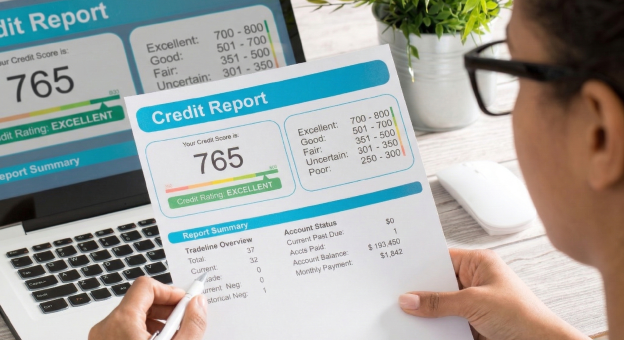

Credit History: Complete Guide for the Latino Community
.svg)



If you've never taken out a loan, or you've heard about “credit history” without being entirely sure what it is or why it matters so much, this article is for you.
Credit history is the key that opens or closes doors: loans, credit cards, rentals, and even some jobs.
What you need to know (TL;DR): credit history is the record of how you handle borrowed money. The three main credit bureaus (Equifax, Experian, and TransUnion) collect this information to generate your report and your score. Building it takes time, but there are accessible tools to start from scratch.
In this guide, you'll understand what credit history is, how it's built, where to view it for free, and the concrete steps to start your own.
What is credit history and why is it important?
Before talking about how to build or check it, it's worth getting the basics clear. These concepts are often confused, and understanding them helps you read any financial document related to your credit.
Definition of credit history
Credit history is the record of how you've used credit over time: loans you've taken out, cards you've held, on-time or late payments, and how much you owe today. In short, it's the proof of how you handle your financial commitments.
For the Latino community, having a solid history makes the difference between accessing fair financing or being left out. According to the Consumer Financial Protection Bureau (CFPB, 2022), more than 25% of Latino consumers are “credit invisible”: they don't have enough credit history for institutions to evaluate them.
Difference between credit history and credit report
Although they're often used as synonyms, they're not the same thing:
- Credit history: the complete record of your credit activity over time.
- Credit report: the document that summarizes that history, issued by the credit bureaus.
- Credit score: a 3-digit number that rates everything in a single figure.
How is your credit history built and how does it work?
Your history doesn't build itself. Every time you take out a loan or use a card, lenders report your activity to the credit bureaus. Let's see what information it includes and how it gets there.
What information is included in your credit history?
Your history collects specific data:
- Open accounts: credit cards, personal loans, mortgages, auto financing, lines of credit.
- Payment history: whether you paid on time, late, or stopped paying.
- Balances and limits: how much you owe and how much you have available.
- Credit inquiries: every time a lender reviews your credit.
- Public information: bankruptcies or accounts in collections.
How do credit bureaus collect your information?
Three main credit bureaus collect your financial information: Equifax, Experian, and TransUnion. They receive information from banks and lenders, usually every month.
What many don't know: the three bureaus don't always have the same information. Some lenders only report to one or two. That's why your Equifax report may show different accounts than your TransUnion report, and your score can vary between bureaus.
At Kiwi, every on-time payment is reported to all three bureaus. If you're building your history from scratch, our credit history-building service generates consistent monthly records.
What is credit history used for in your daily life?
Beyond loans, your history influences everyday decisions that many people don't associate with credit.
Applying for loans and credit cards
When you apply for a personal loan, a credit card, a mortgage, or auto financing, the lender reviews your history to decide three things: whether to approve you, how much to lend, and at what rate. A solid history usually opens up more competitive rates. A limited one can lead to higher rates or a rejection.
At Kiwi, when you apply for a personal loan, we use only a soft pull credit inquiry. That means seeing your options doesn't affect your FICO® score. Learn more about our personal loans.
Terms and conditions apply. Subject to eligibility.
Impact on insurance, employment, and housing
Your history is used beyond loans:
- Insurance: many auto and home insurers review it to calculate your premium.
- Employment: employers in financial sectors may run a credit check before hiring you.
- Housing: landlords and utility companies often request your history before approving a rental or installing service.
How to get your free credit report
Yes, you have the right to see your history without paying anything. Federal law guarantees it. Here are the steps.
Where to check your credit history for free
Under the Fair Credit Reporting Act, you have the right to a free report from each of the three bureaus every 12 months. The official site is annualcreditreport.com: free, available in Spanish and English, and no credit card required.
You can also request reports directly from Equifax, Experian, and TransUnion. The Consumer Financial Protection Bureau (CFPB) offers guides in Spanish on how to do it.
What information to look for in your report
When you receive your report, review three areas carefully:
- Personal information: your name, address, and Social Security number. If something is incorrect, mark it for dispute.
- Credit accounts: make sure all listed accounts are yours and balances match reality.
- Inquiries: verify each inquiry was authorized by you.
Detecting errors early protects your history. If you find information you don't recognize, it could be a reporting error or identity theft.

Apply for your personal loan in minutes, 100% online. Apply without impacting your FICO® score. Subject to credit approval.
How to build credit history from scratch
Building credit from zero sounds more complicated than it is. The key is to start with a small commitment, be consistent with payments, and understand which tools work for your situation.
For immigrants newly arrived in the United States
If you've just arrived, building credit from scratch seems like a vicious cycle: you can't get approved because you have no history, and you can't have history without being approved. But there are paths:
- Get an ITIN or Social Security number. Without one of the two, you can't start.
- Open a bank account. It helps you establish a formal financial relationship.
- Consider a secured card. You put down a deposit that becomes your credit limit.
- Use a Credit Builder program. Small monthly payments that get reported as history.
Kiwi's Credit Builder program costs from $5 a month and reports each payment to all three bureaus.
Terms and conditions apply. Subject to eligibility.
Strategies for young people without credit history
If you've never used credit before, your options are similar: a secured card, becoming an authorized user on a trusted family member's card, or a credit-building program. The key: start with a small commitment and pay it on time, every time.
Protect your credit history: errors and identity theft
Your history is vulnerable to two threats: errors reported by others, and fraud with your identity. Both can be prevented and corrected if you act in time.
How to identify and dispute errors
Errors in credit reports are more common than many believe. If you find incorrect information:
- Document the error with a copy of the report and supporting evidence.
- Send a written dispute to the bureau that reported the error. All three accept disputes in Spanish.
- The bureau has 30 days to investigate under the Fair Credit Reporting Act.
If you need help in Spanish, the Consumer Financial Protection Bureau has resources and a complaint process in Spanish.
Prevent identity theft
Warning signs:
- Accounts you didn't open appearing on your report.
- Credit inquiries you didn't authorize.
- Unknown charges on your bank statements.
To protect yourself: monitor your credit regularly, freeze your report if you're not applying for credit, and never share your Social Security number by phone or unverified email. If you have questions, check our frequently asked questions.
Continuous improvement of your credit history
Having an active history isn't enough. What matters is how you handle it month after month. These are the factors that determine whether it goes up or down.
Factors that affect your credit score
Five main factors determine your FICO score:
- Payment history (35%): the most important factor. Pay on time, always.
- Credit utilization (30%): how much of your available credit you're using. Ideal: under 30%.
- Length of history (15%): how long you've had active accounts.
- Credit mix (10%): having variety of products adds up.
- New inquiries (10%): too many applications in a short time lower your score.
Strategies to maintain a good history
Habits that protect your history long-term:
- Schedule automatic payments so you never miss a date.
- Keep low balances on credit cards.
- Don't close your oldest cards, even if you don't use them much.
- Review your report at least once a year.
If your income varies month to month, look for loans with flexible terms. For more information, check the Kiwi blog.
Frequently asked questions
These are the questions we receive most often about credit history.
Where can I check my credit history?
You can check it for free at annualcreditreport.com, the only site authorized by federal law. You have the right to a free report from each of the three bureaus (Equifax, Experian, TransUnion) every 12 months.
How can I see my complete credit history?
Request all three reports (one per bureau) and review them together. Each one may have different information. If you want to see your score, several apps show score and basic reports at no cost.
What does an 800 credit score mean?
A score of 800 is considered “exceptional” in the FICO® model (which goes from 300 to 850). It means you've handled your credit very well and normally opens access to the best market rates.
When does my credit history get cleared?
Most negative information stays for 7 to 10 years. Bankruptcies can stay up to 10 years. Late payments, 7 years from the first late payment. Positive information can stay indefinitely.
How long does new information take to appear in my history?
Generally between 30 and 60 days from when the lender reports it. Each bureau has its own cycle, so the same event may appear in one before another.
Can I have good credit history without credit cards?
Yes. You can build history with personal loans, Credit Builder programs, auto financing, and other products that report to the bureaus.
What happens to my credit history if I move to another country?
Your credit history doesn't travel with you to other countries: each one has its own system. If you return later, your history will still be there, but without recent activity it may appear limited.
What's the difference between credit history and credit score?
The history is the complete record of your activity. The score is a number from 300 to 850 that summarizes that history in a single rating.
Your next step
Building a solid history takes time, but every on-time payment counts. If you're starting from scratch or want to strengthen the one you already have, Kiwi has options designed for the Latino community.
Visit kiwicredito.com/credit-builder to learn about the Credit Builder program, or explore kiwicredito.com/prestamo-personal to see loan options without affecting your score.
Terms and conditions apply. Subject to eligibility.


Get exclusive personal finance and investing content delivered to your inbox.