

Where to apply for a Personal Loan in the U.S.?
.svg)



What you need to know: In the United States, you can apply for a personal loan from traditional banks, credit unions, online fintech platforms and direct lenders. Each option has its pros and cons. The best one for you depends on your credit score, your urgency, and how accessible the requirements are. What you should avoid at all costs: payday loans and title lenders.
Not all doors are open (but there are more options than you think)
If you've ever been to a bank to ask for a personal loan and were asked for a credit score of 670+, two years of credit history and lots of documents... you're not alone. For many Hispanics in the U.S., especially if they are new to the country or are building credit, traditional banks are not a realistic option.
According to a report from the FDIC (Federal Deposit Insurance Corporation), approximately 13% of Hispanic households in the U.S. are Unbanked (without a bank account) and an even higher percentage is Underbanked (with limited access to financial services). That doesn't mean you don't need credit; it means that the system hasn't adapted to them.
But that doesn't mean you don't have loan options. There are several alternatives, each with different requirements, rates and processes. Let's look at them one by one so you can decide which type of loan best suits your situation.
Option 1: Traditional Banks
Banks such as Chase, Bank of America, or Wells Fargo offer personal loans, but they usually require a good credit score (generally 670 or higher), an established credit history of at least two years, a checking account or savings account with them, and proof of income with formal documentation.
Pros: They can offer competitive fixed rate rates if you have good credit (APRs starting at 6%), and if you're already a customer, the application process can be smoother. In addition, large banks usually have physical branches where you can answer questions in person.
Cons: High eligibility requirements, lengthy processes (sometimes weeks for approval and disbursement), and little flexibility for people with no extensive credit history or SSN. If you're new to the system, you're likely to get rejected, which also creates an unnecessary hard pull on your report.
Option 2: Credit unions
Credit unions are not-for-profit organizations that often offer better rates than banks because they don't have to generate profits for shareholders. Some, such as those serving Latino communities in states such as Texas, Florida and California, have more flexible requirements and bilingual staff.
Pros: Generally lower rates (they can be 2-5% less than banks), more personalized service, flexible terms, and some accept profiles with low credit scores or under construction. Many offer personal lines of credit and lines of credit with favorable terms. Credit unions also tend to be more flexible with documentation requirements.
Cons: You need to be a member, which sometimes requires living in a certain geographic area, working in a certain industry, or belonging to a certain organization. Not all of them are open to people without SSN, and the process can be face-to-face, which isn't always convenient if your schedule is complicated.
A useful fact: you can search for credit unions in your area through MyCreditUnion.gov, the official directory of the NCUA (National Credit Union Administration).
Option 3: Online Fintech Platforms
This is where things get interesting for our community. Las Fintechs are financial technology companies that operate 100% online. Many were created precisely to serve people who are not well served by the traditional banking system.
Pros: The loan application is 100% digital and fast (many respond in minutes), some use alternative evaluation models that go beyond the credit score (such as analysis of your banking transactions and income pattern), more accessible requirements, prequalification with Soft Pull (without affecting your credit), and customer service in Spanish on several platforms.
Cons: Rates may be higher than a bank or credit union if you have little track record (APRs between 15% and 36% are common for profiles under construction), and as with everything, you have to verify that the lender is legitimate before sharing your personal information.
Platforms such as Kiwi, for example, were designed from the start with the Latino community in mind. Each monthly payment is reported to the three major credit bureaus (TransUnion, Experian, Equifax). In addition, many Fintechs offer the option of setting up automatic payments and receiving funds via direct deposit to your bank account.
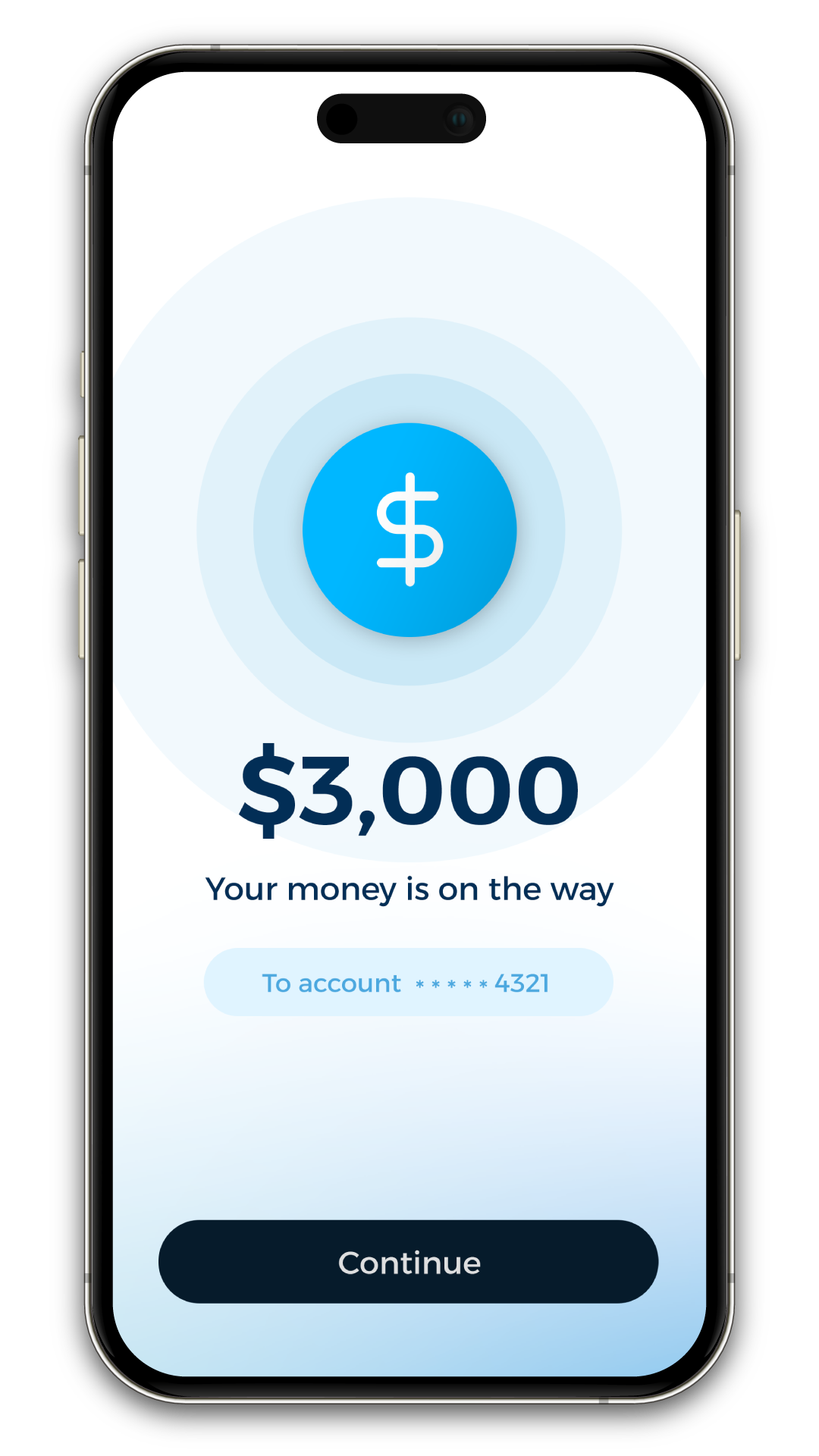
Apply for your personal loan in minutes, 100% online. Apply without impacting your FICO® score. Subject to credit approval.
Option 4: What you should NEVER do (payday loans and title lenders)
There is an option that is everywhere, especially in Latino neighborhoods, and that seems easy but is a trap: payday loans (Payday Loans) and the Title Lenders (who use your car as a guarantee).
According to the CFPB, these loans can have rates equivalent to more than 400% APR. To put that into perspective: a $500 loan with a Payday Lender it can cost you more than $75 in commissions in just two weeks. And 80% of the Payday Loans are refinanced within 30 days, creating a debt cycle that is very difficult to get out of.
Los Title Lenders are equally dangerous: if you can't pay, they take your car away, which you probably need to get to work. According to a study by Center for Responsible Lending, Latino and African-American communities have a disproportionate concentration of these predatory lenders in their neighborhoods.
If someone offers you quick money without questions and without checking your ability to pay, that's not an opportunity; it's a warning sign. It always asks: What is the APR? How much is the total cost? Is there a penalty for prepayment? If they don't give you clear answers, look for another option.
How to Choose the Right Lender for You
Green flags - What to look for:
- They show you the APR clearly before you commit
- You can pre-qualify without affecting your credit (Soft Pull)
- They don't charge penalties for paying ahead of time
- They are state licensed and registered with the NMLS (check at nmlsconsumeraccess.org)
- They offer care in Spanish
- They report your payments to credit bureaus, which helps you build history
- They clearly explain the annual percentage rate (APR), if it's a simple or compound interest rate, and the total cost of the loan
Red flags - What to avoid:
- They don't tell you the interest rate or APR clearly
- They ask you for an upfront payment before giving you the loan
- They pressure you to sign quickly without giving you time to read the terms
- They don't have a verifiable license
- They promise guaranteed approval without reviewing anything (no serious lender can guarantee approval)
FAQs
How do I know if I qualify for a personal loan?
Basic requirements include: consistent demonstrable income, at least 18 years of age, and an identification number (SSN or ITIN). Some lenders require good credit (670+), while others evaluate alternative factors. The best way is to pre-qualify with several lenders to see what options are available for your profile. If you need the loan to pay off credit cards, you can also consider debt consolidation as an alternative.
What credit score is needed for a $10,000 loan?
With a credit score of 670+, you have options in traditional banks. With 580-669, you have options in Fintechs and credit unions. With less than 580, there are still lenders who evaluate other factors (banking transactions, income, etc.), but rates will be higher. There is no absolute minimum requirement; it depends on the lender.
Can I apply for a personal loan without an SSN?
Yes. Some lenders accept ITIN (Individual Taxpayer Identification Number). The options may be more limited than with SSN, but they exist and are growing. The important thing is to look for lenders who specifically mention that they accept ITINs on their website or materials.
How long does it take to receive the money?
It depends on the lender. Banks can take 1 to 3 weeks between application and disbursement. Credit unions generally take 3 to 10 business days. Las Fintechs are usually the most agile, with processes that can be completed in 1 to 5 business days. But remember that times may vary depending on your profile, document verification, and disbursement method.
Is it safe to borrow online?
Yes, as long as you verify that the lender is legitimate. Search for your registration in the NMLS (nmlsconsumeraccess.org), read reviews from other users on sites like Trustpilot or the Better Business Bureau, and confirm that it is licensed in your state. Serious lenders use encryption SSL to protect your data and they never ask you for sensitive information by email or WhatsApp.
How much can I apply for in a personal loan?
The amounts vary depending on the lender and your profile. In general, personal loans range from $1,000 to $50,000, although for new or under construction profiles, initial amounts tend to be more conservative (between $1,000 and $5,000). As you build a history with that lender, you can access larger amounts.
According to the FDIC, approximately 13% of Hispanic households in the U.S. are 'unbanked'. That doesn't mean they don't need credit; it means that the system hasn't adapted to them.
Your Next Step
You already know your options. Now the question is: which one is right for your situation? The only way to know is to see the numbers with your real profile.
With Kiwi, you can request from your cell phone. All without so many complications and without affecting your credit.


Get exclusive personal finance and investing content delivered to your inbox.