
How to calculate the interest rate on a loan in Puerto Rico
.svg)


- Compare by APR, never by the nominal rate, to see the true cost.
- Confirm the total APR with charges included before signing.
- Ask for the breakdown of the term and the exact monthly payment.
- Verify that the lender reports to the 3 bureaus.
- Raise your credit score before applying to lower your APR.
In Puerto Rico, the rate on a personal loan usually falls between 6% and 35% APR (annual percentage rate, the total yearly cost of the loan). That difference decides whether you pay hundreds or thousands of dollars extra for the same borrowed money. And what almost always separates one end from the other is your credit score and knowing how to compare well before you sign.
In this guide you'll learn how to calculate the interest rate step by step, how to tell the rate apart from the APR, and how to compare lenders so you know what APR you can expect based on your profile and what to check before accepting an offer.
If I need $2,000 and I have a credit score of ~580, what can I expect in Puerto Rico?
With a credit score near 580 you're in the credit-building range (subprime), so expect the higher end of the market: as a general, illustrative reference, an approximate band of 25%–35% APR. With a score like that, many lenders approve a smaller amount than requested or ask for a shorter term, so a $2,000 request may come back approved in full, partial, or conditioned on your verifiable income. Before accepting any offer, confirm three things: (1) the total APR with all charges included, not just the rate; (2) the exact term and monthly payment you'll pay; and (3) that the lender reports your payments to the 3 credit bureaus (TransUnion, Experian, and Equifax). A higher score is the most effective lever for lowering your APR, so if the emergency can wait, reviewing your credit score and how to improve it [VERIFY: no English blog equivalent found] for a few months changes the final cost a lot.
Note: This is a fictional example for illustrative purposes. The amounts, APR, payments, and costs shown do not represent offers, rates, or actual terms from any lender or service provider.
What is the interest rate?
The interest rate is the additional cost the borrower pays to a financial entity or institution for receiving a borrowed amount of money over a set period. This percentage represents the price of using that money and varies depending on the type of loan, the loan term, and the type of interest applied.
In practice, the interest rate determines how much you'll pay each month and how much you'll end up paying in total, especially on long-term loans. The opportunity cost of money also plays a role: for the lender, lending means giving up the use of that capital in other financial operations.
Simple example: if you borrow $1,000 at a fixed interest rate of 10% per year, you'd pay $100 in interest in one year. The total to repay would be $1,100. With a variable interest rate, that cost could change if the market rises or falls.
Why do personal loans tend to have higher rates?
Personal loans are unsecured (you don't back the debt with your car or your house), so the lender takes on more risk and charges for it with a higher APR than a loan with collateral, like a mortgage. The less payment history you can show, the more that APR rises to make up for the uncertainty.
The typical range in Puerto Rico runs from 6% to 35% APR, depending on your credit history, your income, and your risk profile. That range also reflects the consumer credit conditions the Federal Reserve reports nationally.
Difference between interest rate and APR
The interest rate is the percentage you pay on the borrowed principal, while the APR includes that rate plus the loan's charges, so it reflects the true annual cost. That's why two loans with the same rate can cost very differently: the one with more charges will have a higher APR. If you want the details, check out what APR is, with simple examples.
Example: a loan can have a 10% interest rate but a 15% APR if it includes charges. That's why the APR is the most useful indicator for comparing a loan's total cost. In Puerto Rico, financial institutions are required to disclose the APR before you sign a contract, as the Consumer Financial Protection Bureau explains.
Example: A loan may have a 10% interest rate, but an APR of 15% if it includes fees. Therefore, the APR is the most useful indicator for comparing the total cost of the loan.
Types of interest rates on personal loans
The final cost of a loan depends on both the interest rate and the term.
Fixed rate vs. variable rate
- Fixed interest rate: predictable and stable payments.
- Variable interest rate: may rise or fall depending on market conditions.
In Puerto Rico, most personal loans are fixed-rate because they make budgeting easier.
Simple interest vs. compound interest
- Simple interest: calculated only on the original amount.
- Compound interest: calculated on the amount plus accrued interest.
Comparative example with $2,000 at 18% per year for 2 years:
- Simple interest:
Interest is calculated only on the original $2,000:
Annual interest: $2,000 × 18% = $360
Total interest over 2 years: $360 × 2 = $720
Total to pay: $2,720
- Compound interest (monthly):
Interest is capitalized every month, so each period is calculated on a larger amount.
Approximate final amount after 2 years: $2,864
Total interest: $864
You pay $144 more than with simple interest
Over longer time frames, the difference becomes much bigger. Many financial transactions, such as credit cards, use compound interest, which is why they tend to be more expensive.
Practical example of a personal loan
Example 1: Small short-term loan
Amount: $500
Term: 6 months
APR.: 25%
Approximate result:
- Monthly Fee: ~$111
- Total interest: ~$166
- Total cost: ~$666
These values may vary depending on fees, closing costs (if applicable) and the amortization method.
Example 2: Medium loan with simplified amortization
- Amount: $2,000
- Term: 12 months
- APR.: 20%
In a French amortization system:
- In the beginning, you pay more interest and less capital.
- In the end, you pay more principal and less interest.
Simplified mini table (reference):
What interest rate is good in Puerto Rico?
It depends on your credit profile, but as a reference:
- Excellent (6% —10%): 750+ credit
- Good (10% — 18%): Good credit
- Acceptable (18% — 30%): construction credit
- High (30% +): No history or emergency loans
Factors that influence your rate
Five elements move your offer: your credit score, your payment history, your debt-to-income ratio (DTI), the amount and term you request, and the type of financial institution. Of all of them, the one that carries the most weight is your credit score: the higher it is, the lower the risk the lender perceive
Regulation and consumer protection in PR
Puerto Rico has several layers of protection for borrowers. The Office of the Commissioner of Financial Institutions (OCIF) regulates banks and licensed lenders; COSSEC supervises credit unions; and the Consumer Financial Protection Bureau oversees consumer protection at the federal level.
You have the right to know the APR, receive a copy of the contract, and file a complaint if you spot abusive practices. Before signing, verify that the lender holds a current license in Puerto Rico.
How a personal loan can help you build credit
Used with discipline, a personal loan can strengthen your credit history. The recipe is simple: borrow a small amount, pay on time every month, and choose a lender that reports to TransUnion, Experian, and Equifax. With on-time payments, your score improves over time.
Soft pull vs hard inquiry
- Soft pull: doesn't affect your score
- Hard inquiry: may lower your score slightly
Kiwi does a 'soft-pull' review to verify your credit history without affecting your credit score.
Why Kiwi is it a good option?
Kiwi offers personal loans designed for flexibility and credit building:
- 100% digital: you request from your cell phone
- Response in less than 24 hours
- No minimum score
- Report to the 3 bureaus
- No prepayment penalty
- Loans from $150 to $3,000*
- Terms from 4 to 24 months
- PR License: PPP-035
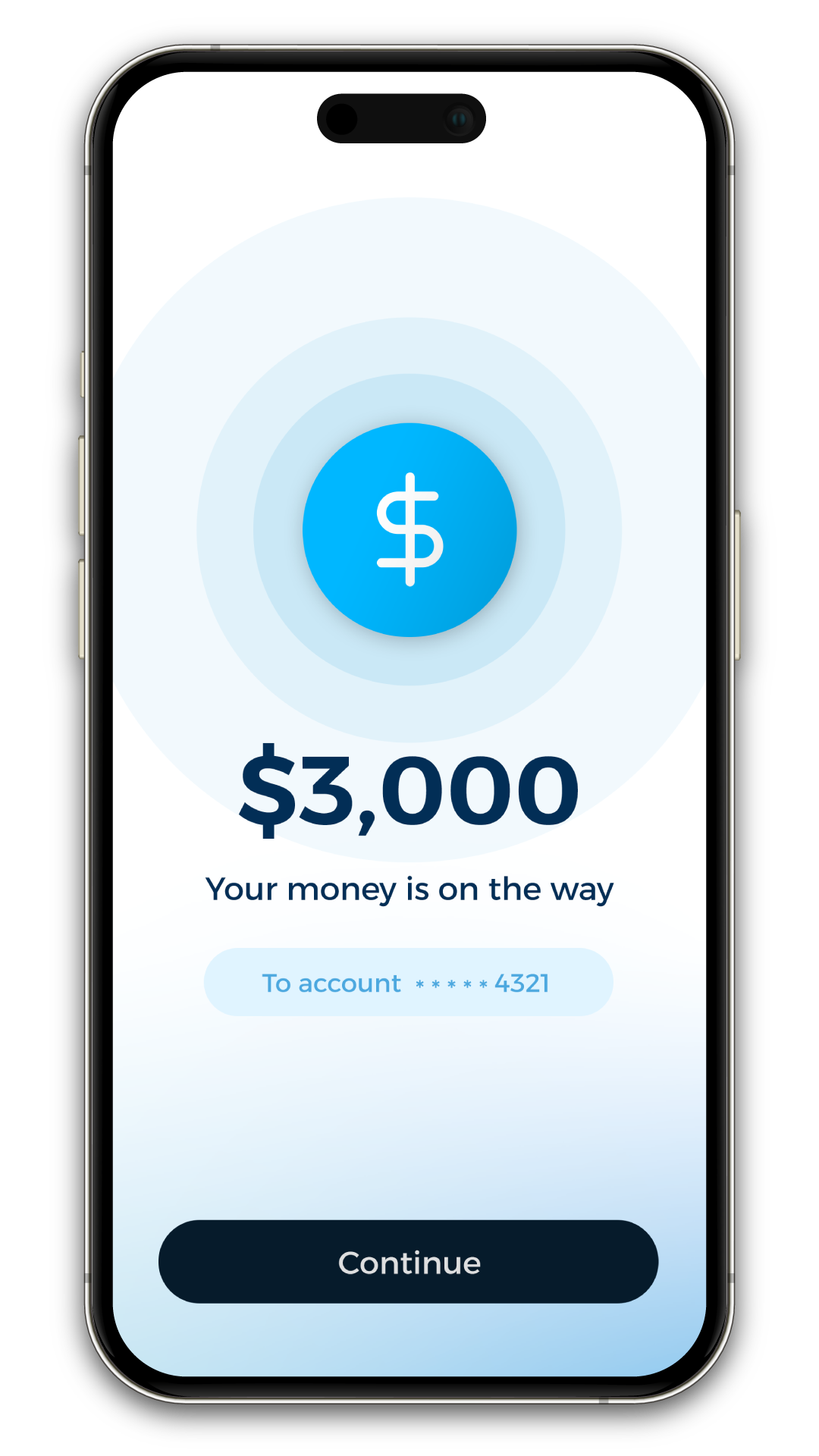
Apply for your personal loan in minutes, 100% online. Apply without impacting your FICO® score. Subject to credit approval.
How is the interest on a personal loan calculated?
With the amount, the rate, and the term. For simple interest you use I = P × r × t. For monthly payments, an amortization plan applies that splits each payment between interest and principal.
What's the difference between APR and interest rate?
The rate is only the interest you pay for the borrowed money. The APR includes that interest plus fees and charges, so it reflects the true cost. The APR is the best number for comparing offers.
What interest rate is normal in Puerto Rico?
It varies by your profile. On personal loans, the APR usually falls between 6% and 35%, and your credit score decides where you land within that range.
How do I compare personal loans from different lenders?
Always compare by total APR, not by the nominal interest rate, because the APR includes the charges and reflects the true cost. Ask each lender for the APR, the term, and the exact monthly payment, and confirm there are no origination fees or prepayment penalties. Also verify that they report your payments to the 3 bureaus (TransUnion, Experian, and Equifax) so every payment builds your history.
How much would I pay for a $2,000 loan in Puerto Rico?
It depends on your APR and your term. As an illustrative example, $2,000 over 24 months at a 28% APR gives a payment near $110 a month and a total paid of about $2,640; at a 12% APR, the payment drops to about $94 and the total to about $2,260. That's why it's worth lowering your APR by improving your credit score before applying, and confirming the exact payment with the lender before signing. (Note: This is a fictional example for illustrative purposes. The amounts, APR, payments, and costs shown do not represent offers, rates, or actual terms from any lender or service provider.)
How does my credit score affect the rate?
The better your score, the lower the risk for the lender. That usually translates into a lower rate and better terms.
Does applying for a loan affect my credit score?
It can affect it if there's a hard inquiry. A soft pull, on the other hand, doesn't affect your score.
Key takeaways
- APR vs. rate: the APR includes charges; the rate doesn't.
- Simple interest: principal × rate × time = cost of the loan.
- PR range: the APR on personal loans runs from 6% to 35%.
- Simple vs. compound: compound charges interest on interest.
- Credit tier: 750+ pays near 6–10%; ~580 gets close to 35%.


Get exclusive personal finance and investing content delivered to your inbox.


.png)