
What is APR? A simple explanation with examples
.svg)


- Always compare by APR, not just the interest rate, to see the real cost.
- Ask for the total cost of the loan and pick the cheapest offer once you add it all up.
- Use platforms with a soft pull to see your APR without affecting your credit.
- Have a plan to pay off the balance before a 0% promotional APR ends.
- If you carry expensive debt, calculate your savings before consolidating to a lower APR.
What you need to know: APR (Annual Percentage Rate) is the total yearly cost of borrowing money, expressed as a percentage, and it includes both the interest and the loan's fees. That's why it's the most honest figure for comparing what a debt truly costs you. The lower the APR, the less you pay, and it's the number you should always compare before signing any loan or credit card.
APR in plain terms
Imagine someone lends you $1,000. Obviously, you won't pay back exactly $1,000; you'll pay back a little more. That little more is what they charge you for lending you the money. The APR is the percentage that tells you how much that cost is over a full year.
If your APR is 10%, that means the annual cost would be roughly $100 extra on that $1,000. If it's 25%, you'd pay about $250 extra. It's that straightforward.
But heads up: APR isn't just the interest rate. It can also include additional costs like origination fees, issuance costs, and other charges. That's why the APR is always equal to or higher than the interest rate alone. It's the most complete number for comparing options, because it reflects the real cost of borrowing.
The term comes from Annual Percentage Rate: the yearly interest expressed as an annual percentage. And although it sounds technical, it's simply the answer to the question: how much is this going to cost me per year?
APR vs. interest rate: they're not the same (and the difference matters)
Many people use APR and interest rate as if they were synonyms, but they're not. The interest rate is only what you're charged for the borrowed money. The APR includes that PLUS other mandatory fees and charges. The Consumer Financial Protection Bureau (CFPB) defines APR as the annual rate that expresses the cost of borrowing money.
For example, a loan might have an interest rate of 8% but an APR of 10% because it charges a 2% origination fee. If you only look at the interest rate, you'd think it's cheaper than it really is. The APR tells you the whole story.
Another example: two lenders offer you the same 12% interest rate. But one charges $200 in fees and the other charges $500. Their APRs will be different, and the one with lower fees will have a lower APR. That's the advantage of comparing with APR.
In some Latin American countries, the equivalent concept is known as the effective annual rate or annual equivalent rate. Here in the United States, APR serves that same function: showing the total annualized cost of credit so you can make informed decisions. If you've just arrived in the U.S. financial system, it helps to understand what APR is in the U.S. and how it differs from how interest works in your home country.
The Truth in Lending Act (TILA) requires every lender in the United States to show you the APR before you sign anything.
How much what you pay changes based on APR: a real example
Let's use concrete numbers. Say the loan amount is $2,000 and the loan term is 12 months:
- With a 10% APR: you'd pay approximately $2,110 in total (about $176 per month)
- With a 25% APR: you'd pay approximately $2,278 in total (about $190 per month)
- With a 36% APR: you'd pay approximately $2,397 in total (about $200 per month)
The difference between 10% and 36% APR in this case is nearly $287 in interest charges alone. It may not seem huge in the short term on $2,000, but think about how that money could go to your family, to savings, or simply to living with less pressure.
And that's on $2,000. If we're talking about a $15,000 auto loan over a long term, the difference between a 7% APR and a 15% APR can be more than $3,000 in accumulated interest over the life of the loan. On a credit card with a $5,000 balance, a 24% APR generates more than $1,200 a year in interest alone if you don't pay off the full balance.
That's why we say APR is the most important number: even if the difference in the monthly payment seems small, the cumulative impact is significant.
How much do I save if I consolidate $10,000 of debt at 20% APR with a loan at 10%?
Suppose you have $10,000 in debt at a 20% APR. Over one year, that debt generates around $2,000 in interest (20% of $10,000). If you consolidate that same balance into a loan with a 10% APR, the annual interest drops to about $1,000, a savings of roughly $1,000 a year just by cutting the rate in half. If you keep that difference while you pay off the debt over, say, three years, the accumulated savings can approach $3,000. The lesson is simple: on the same balance, a lower APR means less money paid in interest and more money that stays with you. Before you decide, calculate your own savings and review the full term in our complete guide to debt consolidation.
Note: This is a fictional example for illustrative purposes. The amounts, APR, payments, and costs shown do not represent real offers, rates, or terms from any lender or service provider.
Types of APR you should know
Fixed APR vs. variable APR
A fixed APR (or fixed rate) stays the same throughout the entire term of your loan. You know exactly how much you'll pay each month, no surprises. It's the most common type on personal loans.
A variable APR involves a variable interest rate that can change over time, generally tied to a market benchmark rate called the prime rate. Credit cards almost always have a variable APR, which means your cost can go up if market rates rise. The CFPB explains in detail the difference between a fixed APR and a variable APR. Because a variable APR is tied to a benchmark index like the prime rate, it can rise over time if market rates go up.
Purchase APR vs. penalty APR
Credit cards can have several APRs. The purchase APR is what you pay on your regular purchases if you don't cover the full balance before the billing cycle ends. The cash advance APR is usually higher and starts generating interest from day one, with no grace period.
But the most dangerous is the penalty APR: if you fall behind on a payment or only make the minimum payment repeatedly, they can trigger a significantly higher rate that applies to your entire balance. According to Federal Reserve data, the average credit card APR in the U.S. tops 20%. Penalty APRs are typically higher still.
How is a loan's APR calculated?
APR is calculated by taking the interest rate and adding any mandatory fees or charges, then converting that into an annual rate. The formula can vary: some products use simple interest (calculated only on the original amount) while others apply compound interest (where interest generates more interest). To calculate the daily interest cost, you divide the APR by 365 days. Lenders are required by law to calculate it in a standardized way so you can compare. If you want to see the mechanics step by step, check out how a loan's interest rate is calculated.
What does a 10% APR on a loan mean?
A 10% APR means the total annualized cost of borrowing money is 10%. On a $1,000 loan, you'd pay approximately $100 extra in interest and fees over one year. The lower the APR, the less the borrowed money costs you.
Apply with Kiwi in minutes, 100% digital. Apply without impacting your FICO® score.
*Subject to credit approval. Loan amounts may vary by applicant's state of residence.
Why APR matters more than you think
When you're making financial decisions about loans or cards, it's tempting to focus only on the monthly payment. But the monthly payment can be misleading: a longer term lowers the monthly payment but makes you pay more overall in accumulated interest costs.
The APR tells you the truth. A loan with a low APR and a reasonable term will almost always be a better option than one with a low monthly payment but a high APR. A classic example: a lender offers you $3,000 at $95/month for 48 months. It sounds affordable. But when you add it all up, you paid $4,560, meaning $1,560 in finance charges alone (not counting possible closing costs). Another lender offers you the same $3,000 at $140/month for 24 months, with a total cost of $3,360. You pay more per month, but you save $1,200 overall.
Here's a practical tip: before accepting any offer, ask them to show you the total cost of the loan (what you'd pay by adding up all the installments). Compare that across your options. The one with the lowest total cost wins.
How to get a lower APR
Your APR depends on several factors, but the main ones are your credit score \[VERIFY: no English blog equivalent found\], your payment history, your income, the type of loan, and the loan amount you request. The better your profile, the better the rates you're offered.
If you're new to the U.S. credit system or rebuilding your history, your options may come with higher APRs at first. The good news is that as you build credit with on-time payments and responsible balances, the rates come down. It's not an overnight process, but it's consistent: every month you pay on time adds up in your favor.
Some concrete strategies to get a lower APR: improve your credit score by paying on time and reducing card balances, review your credit report to correct errors (you can request your free credit reports at AnnualCreditReport.com), compare at least 3 offers before deciding, negotiate with your current lender if you already have a good credit standing with them, and consider lenders that evaluate alternative factors like your banking history.
One important detail: some platforms let you see your estimated rate without affecting your credit (soft pull). For example, with Kiwi you can prequalify and see your estimated APR before committing to anything. That helps you compare risk-free.
*Subject to credit approval. Loan amounts may vary by applicant's state of residence.
Now that you understand APR, use it to your advantage
APR isn't an intimidating number; it's your most powerful comparison tool. Every time someone offers you a loan or a card, the first thing you should ask is: what's the APR? And if they give you only the interest rate, insist on seeing the full APR.
You now have the information to make more informed decisions. Whether you're evaluating a personal loan, calculating how much of a down payment you need for a car, or comparing credit cards, the APR is your compass. If you want to know what rate you could get based on your profile, the next step is to see it with your own numbers.
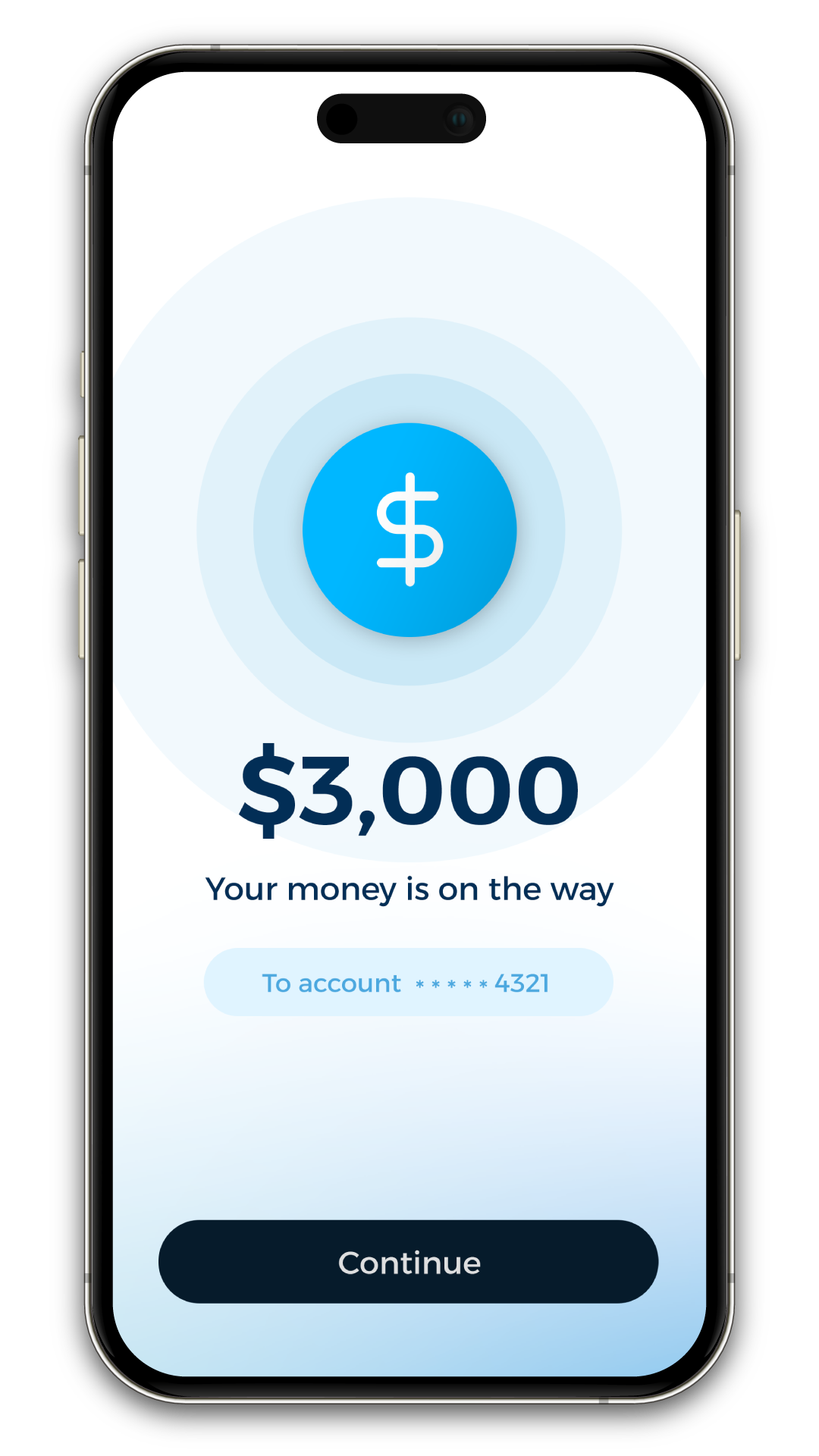
Apply for your personal loan in minutes, 100% online. Apply without impacting your FICO® score. Subject to credit approval.
Frequently asked questions
Is a 0% APR really free?
Not always. Some 0% APR offers apply only for an introductory period (6–18 months). After that, the rate goes up, sometimes significantly. Read the fine print to know what the APR will be after the promotional period, and make sure you have a plan to pay off the balance before it ends.
What APR is considered good in the U.S.?
It depends on the product. For personal loans, an APR below 12% is considered good. For credit cards, below 15% is competitive. For cars, below 7% is favorable. But remember: your rate will depend on your credit profile and market conditions.
Does APR include all the loan's costs?
It includes most, but not always all. Late payment charges, prepayment penalties (if any), and optional insurance generally aren't included in the base APR. Always ask about the total cost of the loan and read all the terms before signing.
What's the difference between APR and APY?
APR measures what it costs you to borrow, while APY (Annual Percentage Yield) measures what you earn when you save. If you have a savings account, the APY tells you how much return you'll get in a year, factoring in compound interest. In short: you want a low APR on your debts and a high APY on your savings.
What is residual interest?
Residual interest is interest that keeps accruing between the date of your last statement and the date you receive and pay the balance. Even if you pay your card's full balance, you might see a small residual interest charge in the next billing cycle. To avoid it, some experts recommend keeping a consolidated zero balance for two consecutive cycles.
Is using a balance transfer a good idea?
A balance transfer consists of moving debt from a card with a high APR to another with a lower APR (sometimes 0% for an introductory period). It can be a good strategy if you have a plan to pay off the balance before the promotion ends. But be careful: many cards charge a fee for the transfer (generally 3–5% of the amount), and if you don't pay on time, the rate goes up. If you're comparing options, also check out these easy-approval credit cards.
Does a payday loan have an APR?
Yes, and it's usually extremely high. Payday loans can have APRs equivalent to nearly 400%. Although they seem convenient because of how fast they are, they're one of the most expensive options on the market. If you need money quickly, consider alternatives like a personal loan with a reasonable APR, a debt management program through a certified agency, or first understanding how debt consolidation works before turning to a payday loan.
Key takeaways
- APR: the total annual cost of a loan, with interest and fees, as a percentage.
- Interest rate: only the interest; it doesn't include fees or extra charges.
- Fixed APR: stays the same; variable APR: changes with the market.
- APR is calculated over a year, so compare loans with the same term.
- A high APR on a large balance generates hundreds of dollars in interest a year.
- Consumer Financial Protection Bureau — What is the difference between a loan interest rate and the APR?
- Consumer Financial Protection Bureau — What is the difference between a fixed APR and a variable APR?
- Consumer Financial Protection Bureau — APR and payday loans
- Federal Reserve — Consumer Credit G.19 (credit card APR data)
- AnnualCreditReport.com — Free credit reports


Get exclusive personal finance and investing content delivered to your inbox.